

When releasing a new product to market, there are a some dynamics that help it be successful. You want to have a large addressable market to start with, and have a good design that solves a problem.
Spider Grills has seen tremendous growth since their founding in 2019. Key to their success is they’ve identified and solved consumer problems in grilling. A great example is the development and release of the Venom Digital Temperature controller.
We launched the Spider-22 pellet adapter and built Spider Grills around that first product – the name started as a bit of an inside joke about Weber kettles needing a “Spider” to make them work even better.
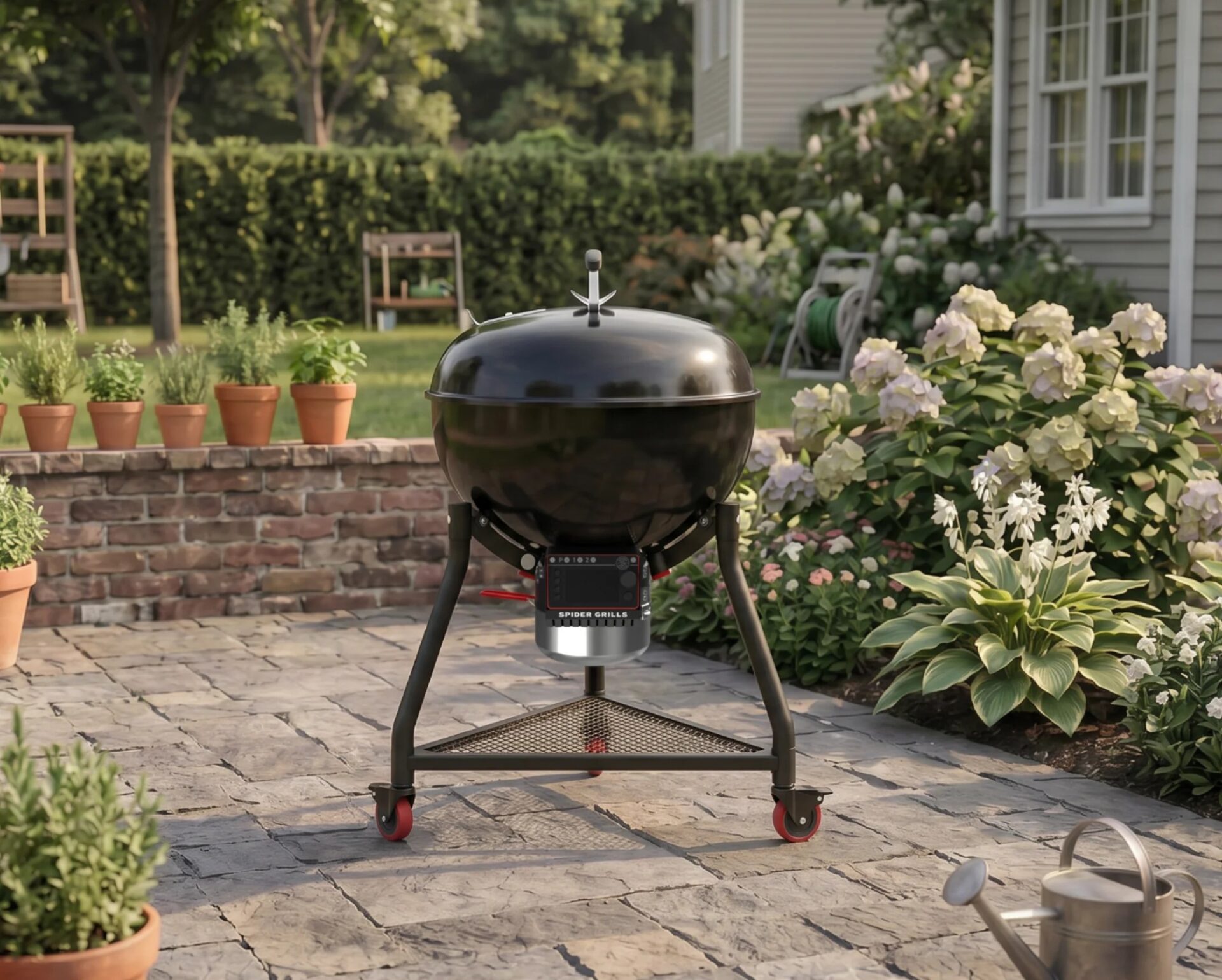
As we thought through the success and massive user base around the iconic Weber kettle, we saw an opportunity for a temperature controller designed specifically for it: something easy to use, that required no tools to set up, and that wouldn’t force someone to permanently alter their kettle by drilling holes in it, the way other controllers on the market do. From there, we explored how to integrate the controller into the kettle in a way that felt familiar to customers – through the ash basket.
We built some prototypes, and the rest is history.
Spider Grills Founder
For outdoor cooking, the Weber kettle has an enormous addressable market. That grill has been a backyard fixture for half a century, making lots of grilling enthusiasts.
Creating an accessory for that grill is a great strategy because of the large install base. You don’t need to sell owners on buying a brand new grill, but rather on buying something to make their existing grill better and easier to use.
You can cook some amazing food on a Weber kettle but there is a bit of a learning curve to control temperatures. When I first started grilling in my younger years, I would just load up the charcoal and routinely overcook burgers with the blast furnace that was my Weber kettle. Forget about keeping temperature for low and slow. Spider Grills understood this consumer problem, and began figuring out how to solve it.
We explored a few different concepts early on, but the obvious solution, at least for us, was keeping the air injection down low. Heat rises, so injecting air below the fire is critical. Trying to inject it at or above the fire makes the fire much harder to control, and it can create real problems: spreading ash around the grill and, more importantly, burning up your fan. Keeping the fan below the level of the fire is essential, because reverse draft can push hot air back through a fan and toast it instantly if the design isn’t right.
Spider Grills Founder
Spider Grills’ focus on durability is one of the reasons their products have been so popular. You can see it from the design of the Venom to their full Huntsman grill that’s made from thick steel.
While you hear about planned obsolescence in some product design, Spider Grills took the opposite approach. They designed the Venom to be improved through ownership. It was one of the design fundamentals they spent time to figure out.
Locking in the temperature control and architecting the system so it could keep improving over time – even for customers who already own a Venom – by pushing updates out to them to make the product and the temperature control better and better. Getting that architecture right, while balancing high durability with a great product at a commercially viable price point, is always tricky. We’ve managed it by continuously challenging the status quo with our design and innovation. We’re always looking to improve, and building that into the product architecture and roadmap from day one has set us up for long-term success.
Spider Grills Founder
Designing a killer product is one thing, but producing it at scale can be another. Luckily for them they already had experience and connections in the grilling industry. That gave them go-to manufacturers to help protype, and ultimately produce, the Venom controller.
We’re designers, engineers, and product developers, and we’ve spent years working with other companies in the grilling industry (unrelated to Spider), so prototyping was the easy part. Spider Grills has an affiliate office in China as well as its own factory in Vietnam, which lets us quickly and easily run through a lot of iterations once an idea is born – getting it tuned and ready for the mass market.
Spider Grills Founder
Spider Grills was able to turn an idea for better Weber kettle into a popular product. They developed the Venom in 2021, and it’s helped the company continue to grow.
It took us about nine months from the initial idea to selling the product to customers. It’s been a fun journey so far, and we’re just getting started!
Spider Grills Founder