
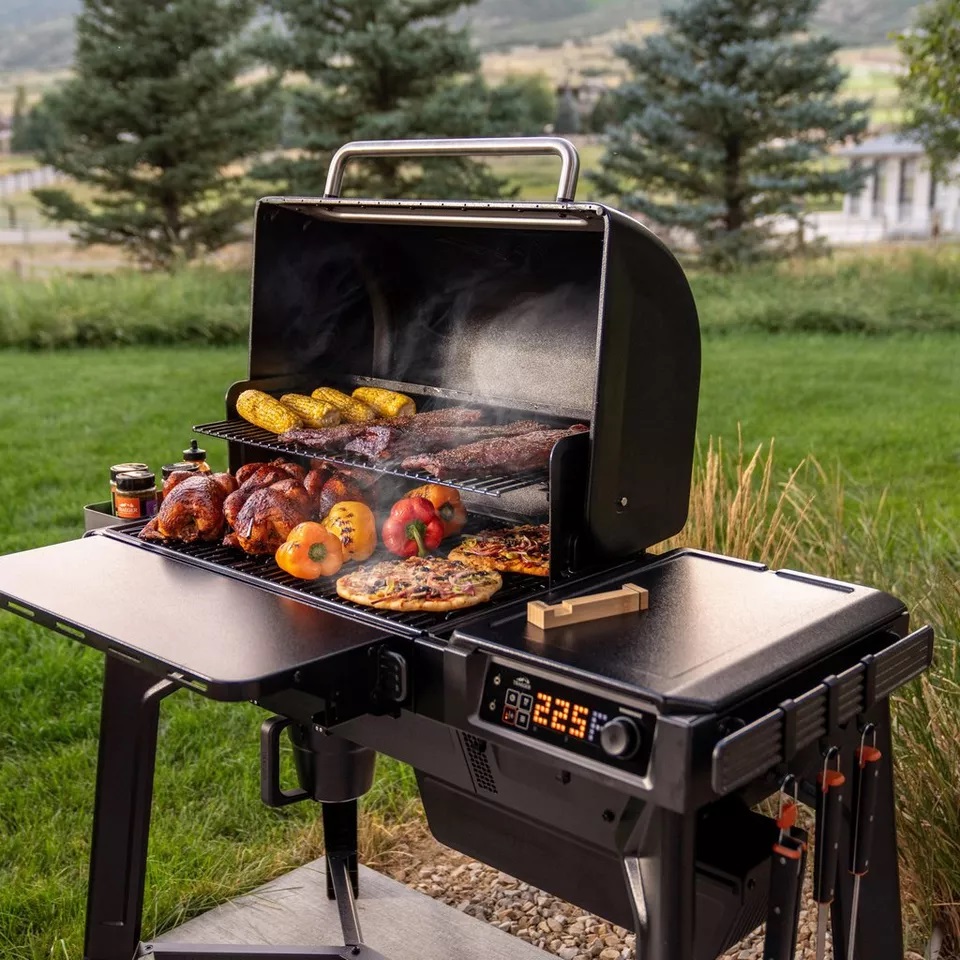

Traeger released earnings today for Q2, which is a very meaningful quarter in the outdoor cooking world. As expected, they spent most of the call talking about the impact of tariffs on their business and their strategy to mitigate the exposure.
They are implementing a plan aimed at expense reduction and improved efficiency that they’re calling Project Gravity. With that they’re prioritizing preserving cash flow in the business and accepting that there are revenue declines from certain initiatives like pricing.
Project Gravity has already begun, and will roll out in two phases through the end of 2026. Below is a summary from Traeger’s earnings press release on the different phases and actions.
- Phase 1 includes actions already implemented or currently in progress. As part of this Phase, the Company executed a reduction in force in the second quarter of 2025. In addition, the Company is integrating MEATER’s operations into Traeger’s broader infrastructure, including a reduction in force of MEATER personnel and the closure of its Leicester, UK office. These actions are expected to deliver annualized cost savings of $30 million once fully implemented.
- Phase 2 consists of a comprehensive evaluation of the Company’s operations to identify additional opportunities for simplification and efficiency. This review is currently underway, and management expects to provide further updates as the strategic plan evolves.
MEATER Consolidation
Sales at MEATER have been negative for quite a few quarters in a row now. As a result of the underperformance, MEATER’s operations will be moved from the UK to Traeger’s headquarters in Utah.
This will not only reduce costs, but Traeger believes it will help with sales, marketing, and brand building by having a centralized structure.
There’s no question that the industry has evolved a lot since we bought the business. We are still, by far, the share leader. And — but what we’ve seen is a lot of low-price entrants. And this happens in categories like this that they get crowded, highly fragmented at sort of the opening price points. And we think this is — over time, we’ll see attrition.
Everyone who entered probably didn’t anticipate all of the other competitors coming in. And so there’s no doubt this has created a challenging environment from a competitive perspective. We’re battling a lot of low-cost competition. It certainly motivated us to think more strategically around our product road map and our pricing strategy, having the right brand, but needing to get a little bit sharper in the category over time. And so we continue to feel the pressure. Now we also saw stabilization.
The rate of decline has certainly come down quite a bit. And so we feel like we’re sort of near bottom from a revenue perspective. And then we chose to approach it from a cost and integration perspective. So as we shared in our opening remarks, we’re in the process of closing down our Leicester office. That has been the headquarters for MEATER. We’re integrating most of the functions into our Traeger Salt Lake City office.
Jeremy Andrus, CEO of Traeger
Traeger still believes in the category long term, and thinks a solution is at retail.
We’ve had to reshape the P&L and find a more efficient way to build it, but we’re also very motivated to ensure that our capability at retail, which represents sort of 90-plus percent of our business for Traeger gets leveraged and that MEATER can really start to grow in a more sustainable way that’s less susceptible to the low-cost entrants that are almost entirely e-commerce based.
Jeremy Andrus, CEO of Traeger
Tariff Mitigation
It’s not secret that Traeger has significant exposure to tariffs. Even before the tariffs were announced this year, Traeger had been moving their supply chain away from China.
Overall, based on the current tariff regime, we expect the unmitigated impact of tariffs to be approximately $60 million in fiscal 2025. We believe that our mitigation efforts will allow us to offset approximately 80% of this impact during the fiscal year.
Jeremy Andrus, CEO of Traeger
Moving the manufacturing and supply chain isn’t a quick or easy task to accomplish. They expect their efforts to meaningfully move away from China will be complete by the end of 2026.
We’ve indicated in the past that at steady state, let’s say, 2024, our mix of China to Vietnam sourcing has been about — in terms of grills, has been about 80% sourced in China and about 20% sourced in Vietnam. We’ve made a lot of progress this year. And my expectation is, as opposed to speaking to this year, I would speak to 2026 because that’s sort of when we’re able to substantially bring this across the finish line. By the end of ’26, we will be almost entirely diversified outside of China.
And I would say pretty steadily through the year to get to that point just as we bleed down inventory and we bring in other inventory. I think it will be a steady transition over the course of the next 12 to 18 months. In terms of — and I’ll just say from a tariff perspective, China is actually not radically different from Vietnam. Vietnam seems to have found sort of settled in on a number from a tariff perspective. China may or may not, it was probably going to be volatile. So we’re going to continue to drive that transition as quickly as we can.
Jeremy Andrus, CEO of Traeger
Financial Performance and Outlook
Traeger reinstated their guidance for the year with revenue down 8% to 11% versus the prior year. They expect this decrease due to price increases and softness in accessories from MEATER’s underperformance.
The financial performance in Q2 was down as expected, but some of that was a change in retailer behavior ahead of the implementation of the tariffs.
Second quarter revenues were down 14% versus prior year in the quarter and adjusted EBITDA was $14 million. Second quarter results were impacted by a number of factors. First, revenues were pressured by pacing shifts out of the quarter into both the first quarter and the third quarter. Much of these revenue pacing shifts were tied to tariff-related dynamics including certain of our retail partners temporarily shifting to domestic fulfillment away from direct import or DI fulfillment. This shift impacts the timing of sales as we recognize the revenue when the retailer takes ownership of the product abroad versus after we transport and import the product in the domestic model.
Lower mix of DI also impacts the gross margin as DI carries a higher margin rate. We also incurred tariff expenses of more than $3 million in the quarter, further pressuring gross margin. The good news is that we are expecting a return to a more normalized mix of direct import fulfillment in the second half of the year as we have worked with our retail partners to reduce overall tariff exposure and that our tariff mitigation and cost reduction efforts will more meaningfully benefit second half results.
Jeremy Andrus, CEO of Traeger
Traeger did see some positive signals from the consumer in the quarter. They also are still seeing positive trends in grills that are priced below $1,000. They should be able to capitalize on that dynamic with a possible new upcoming product release.
The second quarter is our peak selling season and despite grill revenues being down 22%, we saw better-than-expected consumer demand of grills at retail with positive unit sell-through growth. In particular, consumers reacted favorably during our Memorial Day promotion period, which kicks off the grilling season and during the Father’s Day promotional period. One trend we continue to experience is strength at our lower price point grill offering with substantial outperformance of grill sub-$1,000 versus north of $1,000. We continue to see this shift as strong evidence of meaningful consumer appetite for Traeger grills at attainable price points.
Jeremy Andrus, CEO of Traeger
Another bright spot for Traeger is they’ve scored a number of great brand partnerships. This will help expose Traeger and pellet grilling to a wider audience.
We also continue to leverage brand partnerships to engage new consumers and broaden our brand reach. Notably, we launched a partnership with Bud Light and Budweiser, two of America’s best-selling beer brands with extremely large audiences.
Buds Grill Like a Pro campaign partnership with Traeger features content integration, retail displays and cross-merchandising efforts. We also established a partnership with Pepsi Frito-Lay, which highlights outdoor cooking and features Traeger products. This campaign includes significant retail displays, a large media campaign and product sweepstakes. Partnering with brands like Bud and Pepsi allows Traeger to reach a huge global audience in a cost-effective manner.
Jeremy Andrus, CEO of Traeger
Jeremy Andrus owns and buys quite a bit a Traeger stock, and he was asked by Brian McNamara from Canaccord Genuity about his message to prospective shareholders. Jeremy responded with the long term strength of the business and that tailwinds are outweighing headwinds.
After watching Traeger stock get heavily sold off in after hours trading, it seems there’s quite a bit of irrational selling in the outdoor cooking industry overall. I am not advising anyone to buy any stock, and I don’t own stock in any company in the industry, but it doesn’t make sense that the impact of tariffs wouldn’t already be baked into the price.
The whole sector got hit when tariffs were announced, and with every change in the tariffs. There was no new information given by Traeger about their exposure. It was obvious with their supply chain that they would have added expense from the tariffs. Today’s call was mainly focused on all the steps their taking to manage the exposure, which all seem like the right things to do for the health of the business.