
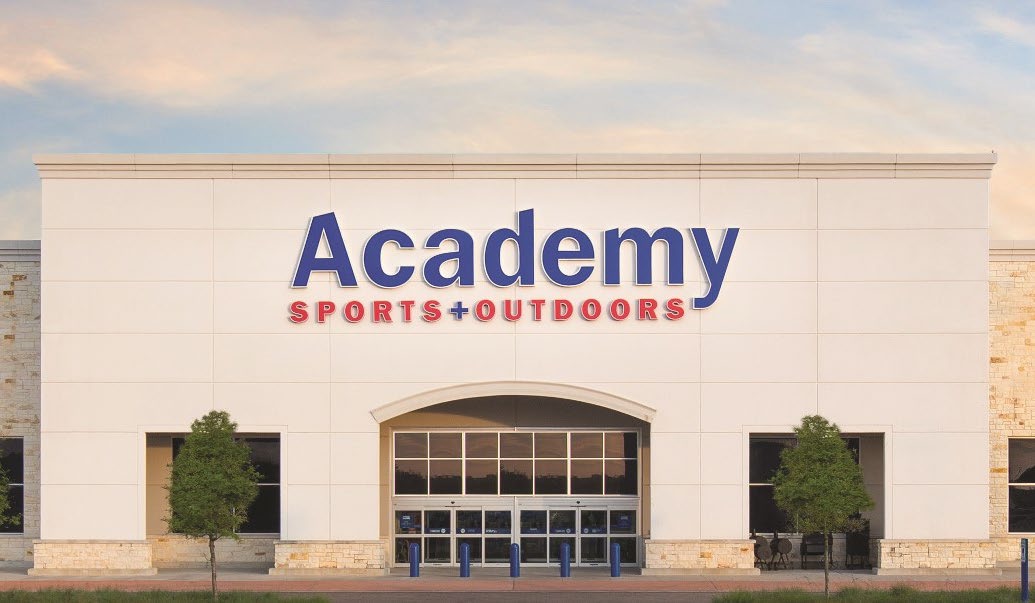

Many of the trends that Academy Sports + Outdoors has been seeing and predicting have continued in their most recent quarter. That means that they’re selling more in digital, getting more high-income customers, and they’re taking market share in outdoor cooking.
On the digital sales front, they’re seeing what many other large brick-and-mortar retailers are seeing, that’s high growth. Many traditional retailers invested big in omnichannel through the Pandemic and the flexibility it offers continues to pay dividends.
Second, the foundational work we’ve done around improving our omnichannel experience continues to pay dividends with growth in this channel accelerating from plus 10% in Q1 to 18% in Q2 to 22% in Q3
Steve Lawrence, CEO of Academy
A different wrinkle for Academy from other retailers though is they are also opening many new locations. This helps them on the digital side because they go into a new market or add density, market to the community, and that translates to digital sales from that market.
They plan to continue with their pace of new store openings in 2026 with 20 to 25 new stores. Of those, an estimated 80% will be in existing markets and 20% will be in newer markets.
High-Income Consumers
Academy has seen a trend over the past year of getting more traffic from consumers in higher income levels. Previously, they reported that their split had become 1/3, 1/3, 1/3 of consumers in the $100k+, $50k to $100k, and under $50k income levels. They’ve continued to trend towards the higher end with the split now more like 40%, 30%, and 30% respectively.
As prices continue to rise across retail and discretionary budgets get squeezed, we continue to see strong growth in foot traffic and share gains from customers in the top 2 income quintiles, which are households making more than $100,000 a year. These top quintiles now represent roughly 40% of our sales. And during the quarter, we saw traffic from these cohorts grow in the high single digits. We’re very happy to see that we continue to drive strong market share growth with this consumer segment even as we started lapping the double-digit growth we experienced last year in the third quarter.
At the same time, we continue to hold share in the middle-income quintile, which is households making $50,000 to $100,000 a year, which represents roughly 30% of our customers. And finally, we continue to see traffic erosion in the lower income cohorts that make less than $50,000 a year, but the pace of these declines was less than what we saw in the first half of the year. As this trend has played out over the past year, we have, in effect, started to somewhat derisk our customer base by giving us less exposure to lower-income consumers that are under the most amount of economic pressure.
Steve Lawrence, CEO of Academy
That shift in income levels has naturally impacted their merchandising at their stores. It’s also helped drive results for the business with the lower income-level consumers being more impacted by the economy.
I think what’s driving that is 2 things. Number one, I do think that the higher income consumer is looking for value. And I think in some cases, we are the value leader in the space, and they’re finding us and discovering us. And I think it’s second, the work we’ve done around the assortment. If you think about where we are today versus where we were even 4 or 5 years ago in terms of layering on better, best brands across the category, that could be baseball bats north of $100 or running shoes north of $100.
I think we’re in a different place today. So I think that the work the merchants have done around building out that better, best assortment, adding brands like Jordan or Burlebo or Turtle Box or Ray-Ban Meadows, all those things, I think, give that customer a reason to come shop with us and permission to continue to shop with us. And we’re not going to stop assorting those brands, right? We’re going to continue to look to build those. That doesn’t mean we’ve lost focus on the value end of our assortment either, but we see this as additive. And so I think as we continue to do this work, bringing in new innovative brands, I think we’ll keep that customer shopping with us and continue to grow share there.
Steve Lawrence, CEO of Academy
Outdoor Cooking Share
To cater to the outdoor cooking crowd, Academy sells a range of grills, griddles and smokers, but they also have a wide variety of consumables. This drives repeat customers and helps differentiate them from other stores.
While other retailers have struggled with outdoor cooking, it’s been a bright spot for Academy in quite a few recent quarters. They called it out again as comping positively.
Looking at category performance across the business, Sports and Rack was our strongest division, posting a 6% increase driven by solid growth in our baseball, outdoor cooking, fitness equipment and bicycle businesses.
Steve Lawrence, CEO of Academy
They’ve focused on growing the category which has led to share growth. I would guess that’s also driven by their strategy to increase their footprint. They are many geographies that aren’t familiar with Academy, so they learn about their outdoor cooking offerings when they open a store in the market.
Similar to last quarter, we were pleased to see meaningful share gains across all of our key businesses such as apparel, footwear, sporting goods, outdoor cooking, fishing and camping.
Steve Lawrence, CEO of Academy