
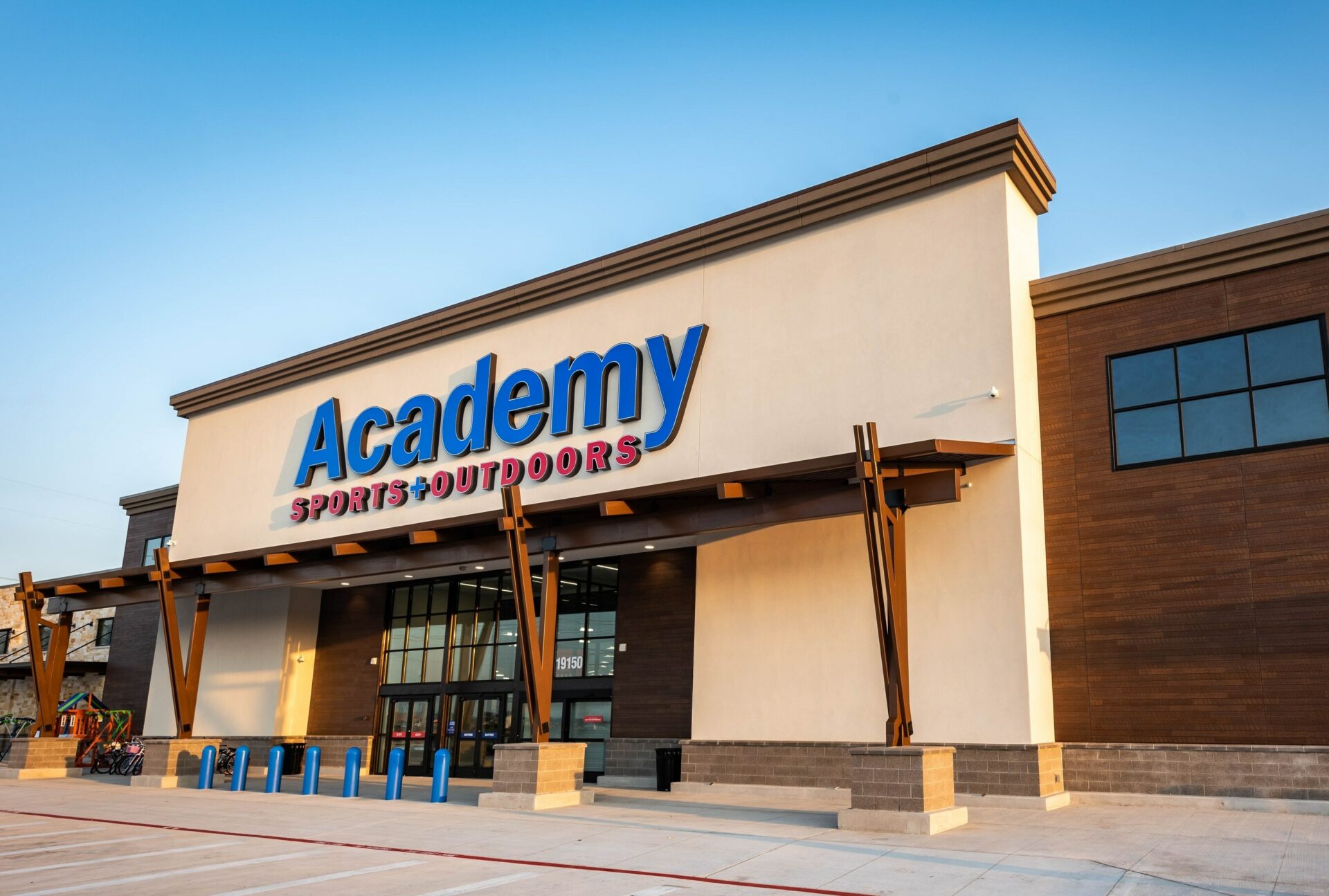

Academy Sports + Outdoors reported Q2 earnings today and saw good revenue growth for the quarter. Their business overall was up 3.3% over last year.
Their business is interesting because you have to comp it against a variety of retailers to capture all of their segments. On the sporting goods side it would be natural to compare them to Dick’s Sporting Goods, and on grills one comp would be with hardware stores like Home Depot and Ace Hardware. Academy’s positive results, and what they said about the consumer, was similar to what the large hardware stores said.
Breaking the business down by category, we had fairly consistent performance across our major families of business with footwear, apparel, sports and rec, and outdoor all running low single-digit increases. We saw solid results across most of our core categories such as athletic and outdoor apparel and footwear, sporting goods, hunting, camping and our backyard businesses.
Steve Lawrence, CEO of Academy
Also with comparing them to hardware stores, one point I’ve continually brought up is that Academy is taking share in the grill space. They mentioned that again in their earnings call today based on their data.
Another key data source for us is Circana, which provides market share data on roughly 60% to 70% of the categories we carry. We’re pleased to see meaningful share gains across almost all of our key businesses such as apparel, footwear, sporting goods, fishing and outdoor cooking.
Steve Lawrence, CEO of Academy
They’re taking share, and their number one growth strategy is opening new stores. This is expanding geography and increasing the density of their existing footprint.
Adding Share of High Income Shoppers
Beyond adding share of outdoor cooking, they’re also adding share and traffic from shoppers in higher income brackets.
We continue to see strong double-digit growth in foot traffic and share gains from customers in the top 2 income quintiles, which are households making more than $100,000 a year. We were flat in traffic share in the middle-income consumer whose households make $50,000 to $100,000 a year. And finally, we continue to see traffic erosion in the lower income cohorts that make less than $50,000 a year, but the pace of these declines was less than what we saw in Q1.
Steve Lawrence, CEO of Academy
The distribution of each income cohort is spread pretty evenly at 1/3 each. What they’re losing from a revenue standpoint in the lower income brackets, they noted they’re more than making up for it with the higher income brackets.
As it relates to the size or the penetration percentage, so it literally is almost 1/3, 1/3, 1/3. So 1/3 quintiles 1 and 2, so making below 50,000, quintile 3, 50 to 100, approximately 1/3 and then above 100,000, quintiles 4 and 5, about 1/3. I would tell you, even over the last year, there’s been a radical shift in that as quintiles 1 and 2 frequent us less. And quintiles 4 and 5 are significantly growing trading into Academy. So I think at some point, I’ll maybe provide a little bit more color related to that. But generally speaking, 30% to 33% for each of those 3 cohorts.
Earl Ford, CFO of Academy
With the help of the data that Academy collects, they can continue to market to the higher income consumers. Beyond influencing purchases, they can also leverage the success they’ve had as an omnichannel retailer to convert online shoppers to in-store and vice-versa.
I mean, obviously, having the new CDP, having done all the data resolution as we get more of these people shopping with Academy, they’re getting added to our customer file. They’re high-value customers who are coming in and shopping for the first time. Our goal is certainly to turn them in from casual shoppers into Academy loyalists. We have a ton of plays we’re working on. One of the things I was just talking to our Chief Customer Officer about last week is we got some of these people who come in and shop either through one channel or the other, whether they’re dot-com shopper or a brick-and-mortar shopper primarily.
So what we would expect is when you look at the combination of the two, the kind of the customer shops across both, those are our most valuable customers. And so we’re really doing some targeted marketing to try to convert store-only shoppers to the omnichannel shoppers or online shoppers to be omnichannel shoppers. And there’s a lot of really good work the team is doing that candidly, we couldn’t have done several years ago because we didn’t have the CDP, we did not have all the information at our fingertips that we do now have.
Steve Lawrence, CEO of Academy
That’s important from a marketing perspective but also when it comes to product selection. As it relates to outdoor cooking brands, there may be opportunity to floor more premium offerings or certain brands that appeal to higher income consumers.