
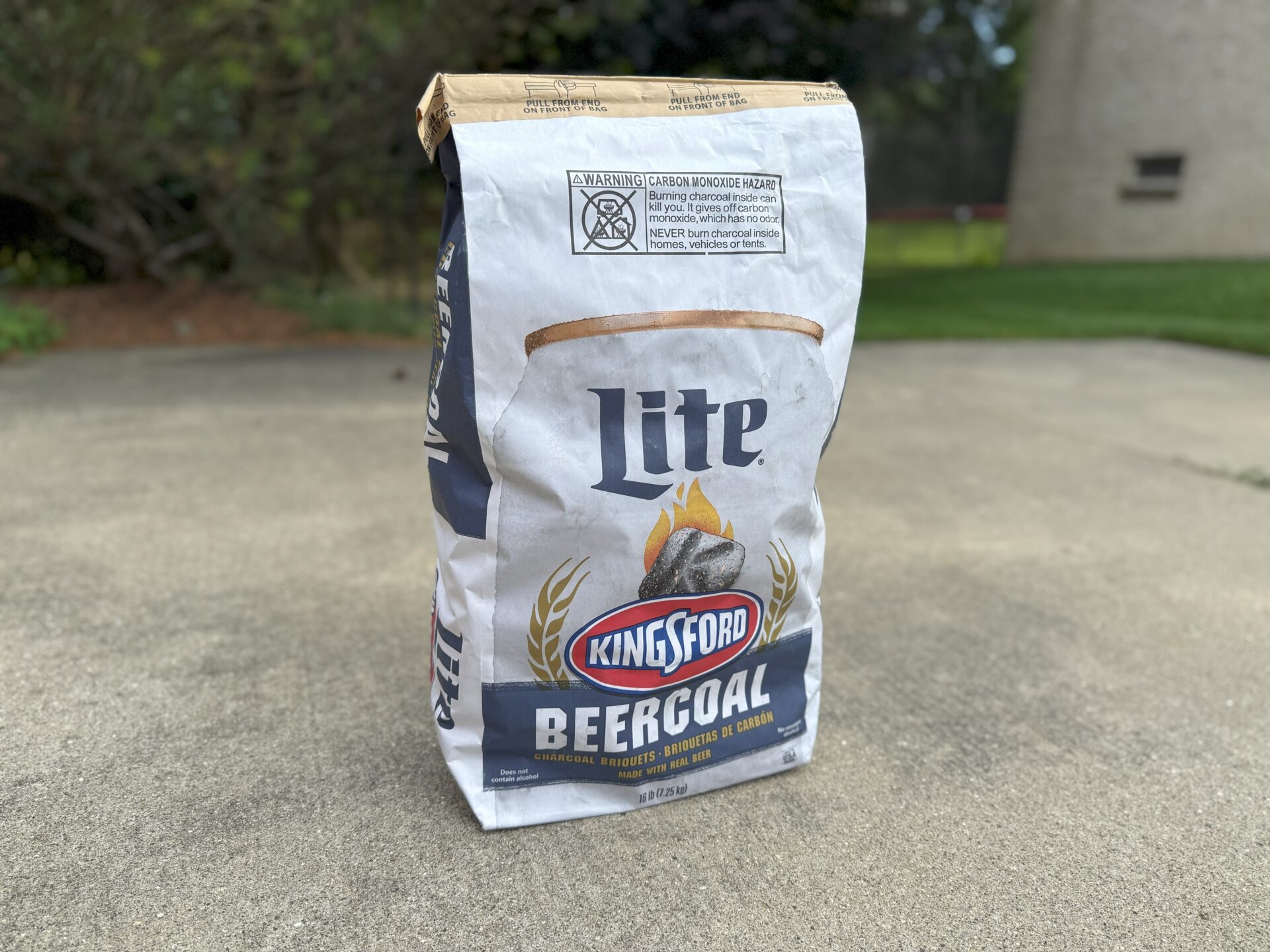

Kingsford’s parent company, Clorox, released earnings today for their quarter ended in March. It’s a little early for much news directly related to Kingsford, but Clorox always has their finger on the pulse of the consumer.
They already were seeing value seeking behavior in previous quarters, but that’s turned up another notch with the conflict in the Middle East. It’s hurting consumers and it’s hurting input costs for Clorox.
Clorox had a great summary of the consumer in their prepared remarks.
From a consumer standpoint, value-seeking behavior remained elevated throughout the quarter, alongside heightened promotional intensity across the vast majority of our businesses. As the quarter progressed, consumer confidence weakened further as consumers faced rising gas prices and a
Clorox Prepared Remarks, Q3 FY26 Earnings
weaker jobs outlook. As a result, consumers became even more selective in their spending, making it
more competitive to capture incremental share of wallet. We continue to see a bifurcated consumer environment, with higher-income households demonstrating resilience by purchasing larger pack sizes and increasingly shopping in the Club channel, while lower-income consumers remain under pressure and are gravitating toward smaller sizes and more affordable options. Value remains top of mind across the spectrum, but purchasing behaviors vary meaningfully by income level. We’re meeting consumers where they are, focusing on value superiority by offering the right mix of pack sizes, price points, and forms, allowing us to serve both value-seeking and premium-oriented shoppers while working to capture share of wallet across our portfolio.
What Clorox is seeing has caused them to lower their guidance. Beyond hurting the consumer, they expect 100 to 150 bps of margin impact from increased input costs in fiscal Q4.
At $100 oil, they expect that to translate to $20 million to $25 million impact. They also cautioned not to extrapolate that because of all the uncertainty around the situation.
So just from a Middle East perspective, I think what’s important to note, and I’ll just go back to what Luc said, I think that’s what everyone knows, Q4 is right in front of us. So we can see the energy complex effects that are happening, and you got that right in the $20 million to $25 million. But as we look to the year ahead, what I would just caution us all to do is there are so many impacts potentially depending on how this conflict plays out, how long it goes, other related downstream commodity impacts that can happen that we’re watching carefully, and they’re just really uncertain and volatile right now.
And so if everything were to continue as is, and it was just energy complexes, that would be a fair set of assumptions. But I think based on what we know and what goes through the Strait of Hormuz and things that are happening now across infrastructure, it’s — we’ll be better positioned to tell you in ’27 exactly what we think that looks like depending on the assumptions that we’ll have at that time. But I just — I wouldn’t take that and just multiply that. That’s only one of the impacts. And again, we’ll be watching the other ones carefully as we move forward. I’ll hand it over to Luc.
Linda Rendle, CEO of Clorox
To deal with all of that extra cost and uncertainty, much of the call was about revenue growth management (RGM). They have quite a few levers to pull with that depending on consumer reactions. One lever they’ve used before when we were dealing with high inflation was price, but they are hesitant to lean to heavily that.
I think what you’ve heard from everyone is we expect rising inflation and what Luc talked about was our ability to handle these over time, and we feel confident about that ability given the toolbox that we’ve built over the last number of years and certainly how we handled the last round of inflation that we experienced in 2022. That being said, on the pricing front, although we’re evaluating pricing and expect that we could take potential targeted pricing, we are approaching this with a high level of discipline and caution. We know the consumer is under stress, and our absolute #1 priority is to ensure that we are driving improvements in value superiority to drive our categories and to drive share. So we do see there’s places where we think we can take pricing. There are places where we can do trade optimization.
The point that Andrea made on RGM is going to be very important, and we can be very targeted with that activity. So I think these are conversations that certainly everyone in the industry will be facing, which always makes it a more productive conversation because everyone sees what we see. But at the same time, we are all focused on the same thing and our retailers are seeing exactly what we see, a stressed consumer, and we want to make sure that we’re doing the things for long-term category growth that are right. And so again, I feel like we have the right tools. I know we can handle this. We’ll discuss the pacing between sales and margin as we get a better look at what ’27 will bring from an inflation perspective. And our #1 priority will be on driving consumer stability and ensuring we have value superiority to do that.
Linda Rendle, CEO of Clorox
Tax Refunds
I’ve written before how Tractor Supply was hoping to see increased consumer discretionary spending from tax returns this year. On their call they commented that it didn’t happen and they were speculating that tax returns went to essentials instead.
It’s interesting because Clorox confirmed that in their call. Clorox sees the other side of it where they’re selling a portfolio of essentials, and they saw in uptick in sales.
What we did see in Q3, though, was market differences in January, February and March. January and February were more in line with what we expected, and March was slightly better, meaning that the categories at the end of Q3 were slightly above our expectation of 1%. What we think happened in March was that people received additional tax refunds and some of that money they spent back in essentials categories on stock-up trips. But we’re starting to see that decline a little bit as people are having to spend more money at the pump.
Linda Rendle, CEO of Clorox
That’s not a great story heading into grilling season this year. A pressured consumer getting even more costs layered on, coupled with rising cost of goods.