
 component, much like the large majority of other brands at that time.)
Traeger reported earnings today and with it there was a bunch of interesting strategic news for the brand. They’re evaluating how to make their business more efficient through their Project Gravity strategy and with that they’re transforming the way they do business.
Probably the biggest news is they’re going to stop selling products on their website. That’s a massive shift from where they started. Back when they IPO’d their business they stressed the direct-to-consumer (DTC) component, much like the large majority of other brands at that time.
Next, we are planning to shift our traeger.com website to a content and brand storytelling focus, and we’ll be exiting the direct-to-consumer commercial aspect of the website after the fourth quarter.
Consumers seeking to buy Traeger products on traeger.com will be redirected to our retail partners’ websites. Our website is a critical asset, and it is the first place where many of our consumers go to conduct research on our grills. However, profitability in this channel is not where we would like it to be, and we believe that by redirecting consumer traffic to our retail partners’ websites, we can retain a meaningful portion of these sales at a higher incremental margin while reducing overhead and complexity tied to our own DTC business.Jeremy Andrus, CEO of Traeger
We will also be partnering with our retailers to optimize the digital media and advertising strategy for Traeger Online in an effort to drive demand and return on advertising spend for these partners. Not only do we believe this shift will drive efficiency to our business, but we also believe the change will result in a better experience for our consumers.
That shift away from DTC is something we’ve seen at other companies like Solo Stove, Ooni, Gozney, and many others. Outside of grilling, there are countless former DTC darlings like Casper, Warby Parker, and Allbirds that all have shifted their distribution model.
The most surprising part of the change for Traeger though is that they’re moving away from it completely. The first question that Traeger received on their earnings call was from Brian McNamara at Canaccord Genuity about clarity on the change.
. First of all, while in many consumer businesses, the direct channel is the margin monster, that’s not the case in our business just due to the supply chain, the size and weight of shipments and dropping them on it’s the last mile that’s expensive.
Frankly, it’s the last mile that also suboptimizes the consumer experience. And so as we looked at both the economics, the bandwidth and cost needed to drive that channel from technology infrastructure through advertising to acquire customers. And then we looked at the end consumer experience. It was clear to us that this was not the right channel for us to be driving.
And so as we think about what that will look like, I would say, first of all, we will — we’re working with retail partners so that we can offer choice to our end consumers. We’re being thoughtful to the consumer experience that they can provide. First of all, ensuring that we can connect into inventory levels, send a transaction to a retailer that they can quickly service and that they can service in a high-quality way.
We’ll look at capabilities like assembly and delivery, which is clearly a better experience than the last-mile outsourced truck or van sort of dropping off a grilled box in someone’s back porch. We think we can partner with retailers that improve this experience.Jeremy Andrus, CEO of Traeger
And so we’re in the process of defining exactly who that will be. And we’ve got technology selected. And we’re confident that this will be an opportunity to continue to drive revenues, but at higher margins at better experience to the consumer. We’re certainly going to be attentive to ensuring that we drive as much of that revenue there as we can. We want to make sure that there’s minimal breakage in the process. But long-term, we really believe in this approach.
I’m sure it makes sense from a cost perspective, and I’ve had my share of issues with last mile delivery, so I understand the motivation. In regards to assembly though, I hope Traeger doesn’t lean too heavily into retailer assembly and gets away from the assembly experience of their grills.
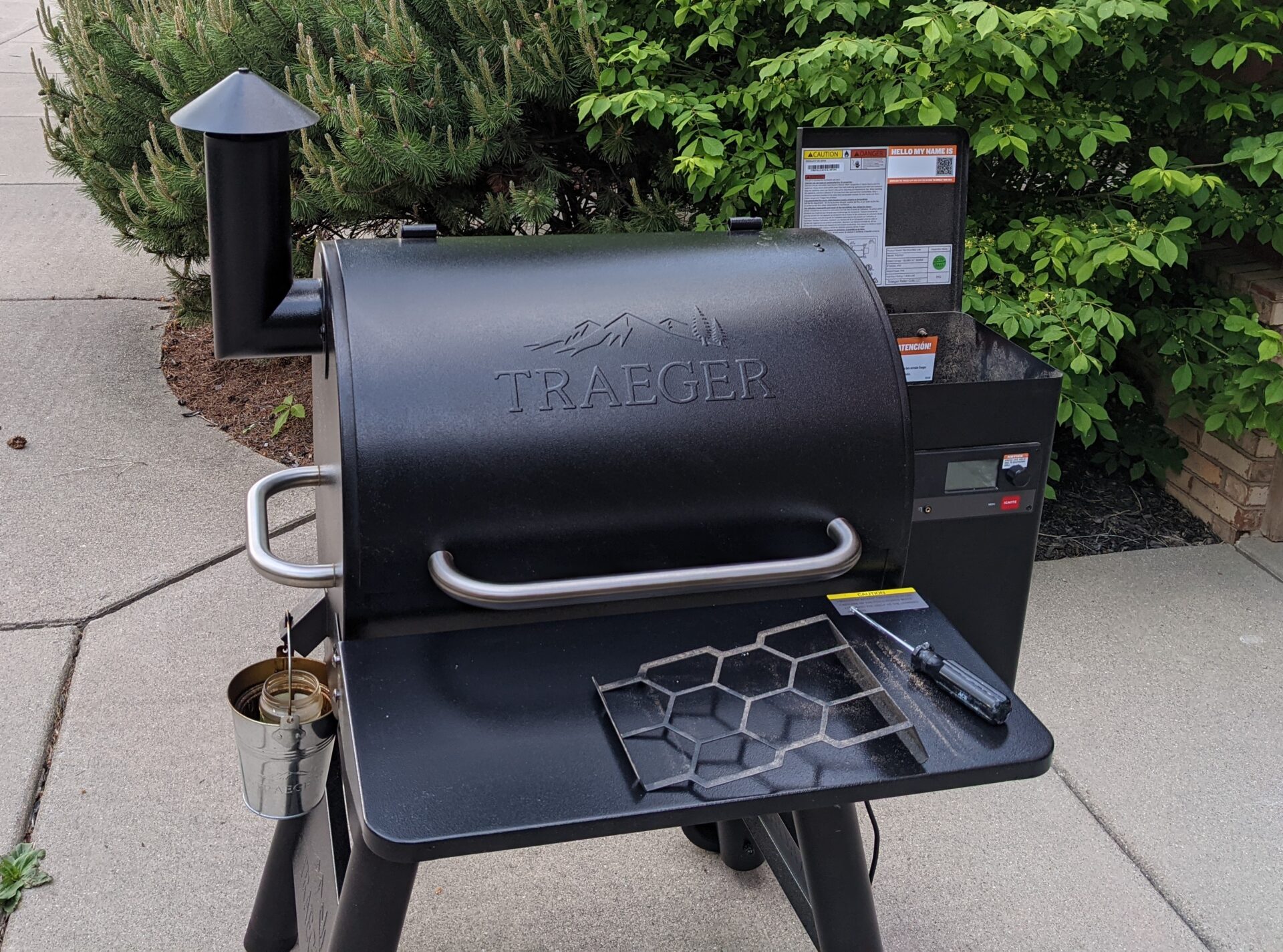
I still distinctly remember assembling a Pro 575 almost five years ago and how well they did with the packaging. Being able to turn the big grill box into a little cabin for my kids to play in was important for connecting with the brand. That being said, I bought the Pro 575 from Home Depot because I was worried about the grill ariving damaged and having to deal with the logistics of that.
It also will be interesting to see how Traeger redirects to retailers. That seems to be an obvious area of leverage for Traeger with retailers.
Costco Roadshows
For anyone not familiar with Traeger’s roadshows at Costco, they have a display setup at different times of the year where a person affiliated with the brand can show Traeger grills and answer questions. They also usually offer discounts or package deals.
It’s been something that Traeger has done for over ten years, and is frequently mentioned in online forums for people trying to learn about the brand. It also helps teach the consumer about what a pellet grill is in general.
Traeger is going to stop doing roadshows at Costco. Given their history with roadshows, it’s another big change for the brand.
First, we will be exiting the Costco roadshow business. This program was an early driver of Traeger’s brand awareness and growth. However, over time, this business’ profitability has been declining, given increasing costs, including transportation rates and labor. Costco will remain an important partner to us, and we will continue to sell Traeger products through Costco’s traditional in-line business.
Jeremy Andrus, CEO of Traeger
This strategic change is part of what they’re doing with Project Gravity. They’re rethinking their business model and aren’t afraid to make major shifts where they believe it makes sense.
And let me just add specifically on Costco roadshow since you mentioned it. I think that’s a really good example of how we’re stepping back and really assessing why we do what we do, how we do it, what the most profitable, scalable way to run this business is. And the Costco roadshow, I think, it’s a great example of a program that’s been great for our business.
We’re more than a decade doing Costco roadshows. And it was profitable. Supply chain costs increased, T&E costs increased, labor costs increased. It was neutral. And then we started to think about just the cost or the value of the impressions that we gained. And I would say that the tariffs were the last sort of the last piece of economics that really just made it not work anymore. With that said, it’s been foundational.Jeremy Andrus, CEO of Traeger
We now get an opportunity to redirect or redeploy the savings from that program into more scalable ways to drive awareness and conversion. So I’m actually really proud of the team for digging deep and deeply assessing elements of our business that were important and that have been sacred but being willing to really think about what is the better way to drive the business going forward.
Direct Import
Tariffs and how they impact the supply chain at Traeger is always a topic of discussion. Some updates this time are that Traeger continues to move their production out of China and all new grill SKUs will be manufactured in Vietnam.
Traeger has also successfully moved their largest retailers back to direct import. They had moved to domestic fulfillment previously because of tariff advantages.
Well, I would say there have been some meaningful shifts over the last couple of quarters. As the tariff landscape shifted, it didn’t make sense for a period of time for retailers to direct import the inventory largely because the tariff exposure was so much higher on the wholesale cost than on our cost of goods.
And so a lot of our partners did shift towards a domestic fulfillment model. Fortunately, we’ve worked very closely with them to implement a first sale process, which is an efficient way to direct import without driving higher aggregate tariff costs. And so that’s actually one of the things that drove some of the some of the shift into the third quarter, we were fulfilling domestically, some of the revenue shift, I should clarify.Jeremy Andrus, CEO of Traeger
We are filling domestically, but we’ve shifted the largest retail partners back to direct import. In terms of their behavior or their point of view around inventory in general, we’re not really seeing that change. We’re not seeing any change to the allocation of space at retail to the assortments. And we’re not seeing a different strategy with regards to inventory than we were seeing pre-tariffs.
Product Innovation
You know there’s lots of important news when I’m writing about product innovation last. It’s one of my favorite things to write about.
There was some talk of innovation on the earnings call, and I read into it that we should be expecting a new top end grill in the near future. Before that though, I still think we’ll see an inexpensive model be released.
Traeger is seeing continued success every quarter with sub-$1,000 grill models. It’s a good entry point into the brand that helps sell accessories, consumables, and the next grill.
There’s overwhelming evidence that the Westwood will be released in the near future. It’s a feature rich grill that likely will be successful for them.
Back to the top of the line Timberline though, below was a comment on innovation that would imply we’ll see a new one in the near future.
If you look at the strategy that we laid out a few years ago in introducing products at a premium price point and bringing innovation downstream, you’ve seen us launch the Timberline XL, which is a $4,000 grill this year — the year after that, we launched the Ironwood, which had elements of technology that were inspired by the Timberline. And then we saw a similar movement downstream in Woodridge. And so we will continue to do that.
The focus will always be on our core wood pellet grill experience. We think that’s really what drives our consumer and the community, and we’ve done some — we’ve invested in accessories to enable that to make that experience better. We have done a little bit of work in adjacent categories with the Flatrock 3-zone and 2-zone products. But the wood pellet grill is the center of our universe. — and we will continue that process to bring value downstream.
And then as is, I think, the circle of life and product development, we’ll then go back upstream, launch new innovation and bring it downstream.So we’re going to continue that process. And we believe that over time, the consumer will see Traeger as the innovator as always being fresh in its portfolio, product portfolio, and that is an important foundation to our business.
Jeremy Andrus, CEO of Traeger