
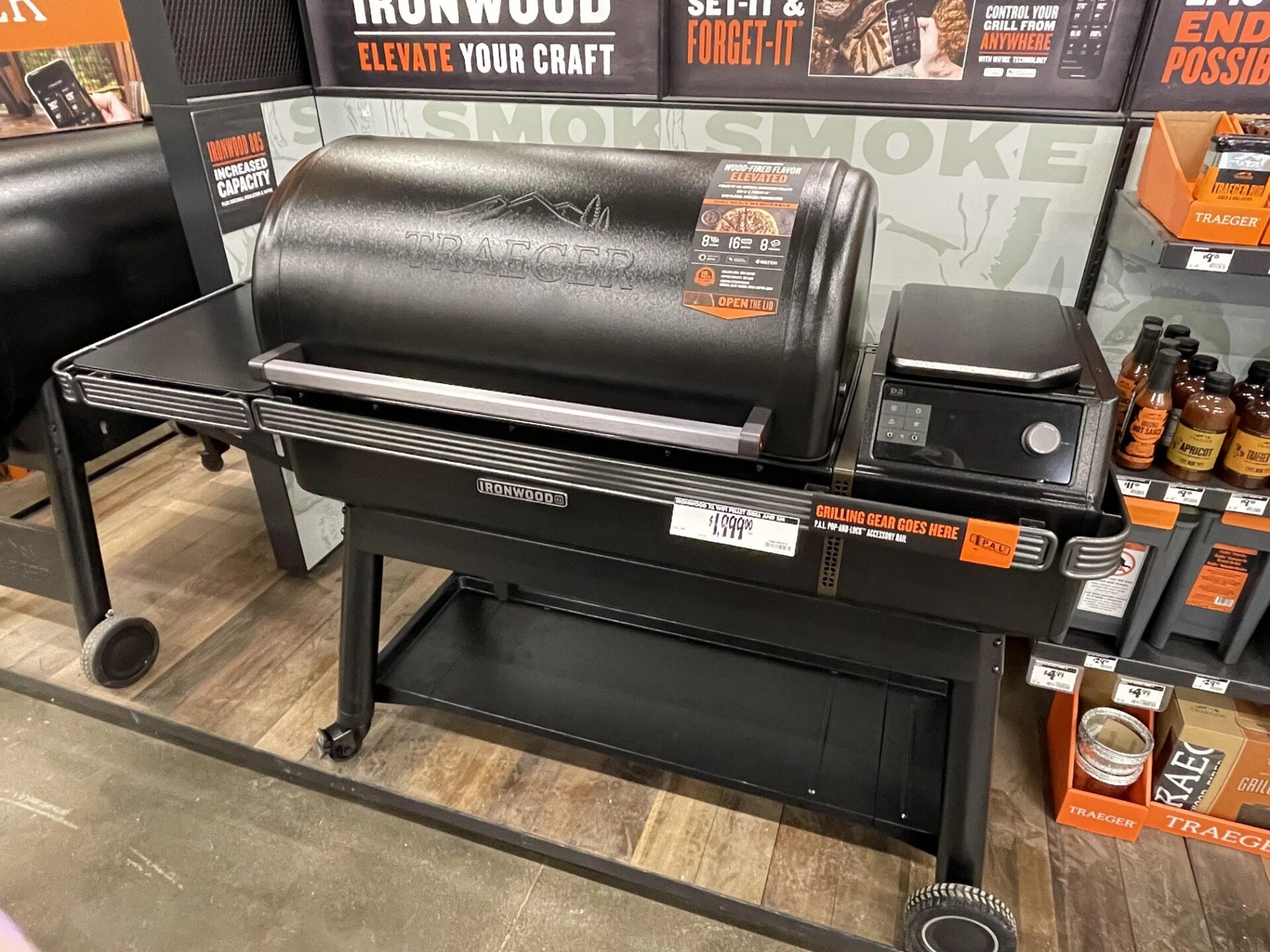

Traeger reported Q3 2026 earnings yesterday and showed a large drop in revenue when you look at face value. Things aren’t quite what they seem though, but getting to the truth is pretty difficult.
Third quarter revenues decreased 40% year-over-year to $75 million. Looking at category performance, Grill revenues decreased 48% to $40 million in the third quarter, reflecting the marketplace health and channel optimization actions I mentioned earlier as well as the mix shift towards more accessible price points that Jeremy discussed. Consumables revenues declined 23% to $19 million, primarily driven by lower wood pellet sales related to seasonal order timing and changes in retail channel dynamics. Accessories revenues decreased 34% to $16 million, primarily from lower sales of MEATER smart thermometers.
Joey Hord, CFO of Traeger
With retailers buying inventory ahead of tariffs, and Traeger implementing Project Gravity which caused them to get out of DTC and certain retail relationships, year-over-year comps are really tough. One analyst asked about it on the earnings call in a really direct manner.
Acknowledging timing impacts, optically, this looks like another top line miss. What gives you confidence that Q4 and then 2027 will be the return to growth that the market has been anticipating for some time now?
Madison Callinan, Canaccord Genuity Corp.
I get why the analyst would be asking that. Traeger provided some anecdotal evidence that things were progressing as expected but they didn’t do the calculus to attribute revenue to each of the one-off items to provide an estimation of a comparable revenue number.
So first off, I think Q3, what we’re experiencing is just a tough comp year-over-year. So if you go back to FY ’25, there were some pacing dynamics driven by the tariff environment where Q2 revenue paced in Q3 and Q4 paced into Q3 as well. And then we did have that onetime order in Q3 as well, which buoyed the results. So overall, the comparison is tough. Q3 and FY ’25 was the only quarter we grew.
As far as the confidence in the year, we have had revenue slip from Q3 into Q4. That was driven by a onetime event regarding shipping container availability via which I referred to in my opening remarks via a typhoon. That revenue has already shipped and in October. And then additionally, just what gives us confidence is the addition of Lowe’s. Most of our revenue in Q4 is event-driven regarding orders for our load-in behind Lowe’s. And that’s why really we’ve tightened the range top line and bottom line.
Joey Hord, CFO of Traeger
Strategy
It’s the kind of market where, especially if you’re publicly traded, you’re trying to survive by driving revenue in hopes of building brand affinity and innovation for the future. I feel like there’s some of that going on right now with Traeger.
They’ve moved pretty far from what their original thesis was of building an aspirational brand through marketing, superior product experience, and somewhat exclusivity. That meant preserving ASP and higher margin than competition. They noted in their quarterly financial filing that their ASP is down significantly.
The decrease was primarily driven by a reduction in average selling price in excess of 30% and a decrease in unit volume in excess of 20%. The decrease in average selling price was primarily due to the current year launches of lower-priced offerings compared to higher-priced launches in the prior year period, and channel and product line optimization actions taken under Project Gravity.
Traeger Q3 2026 10-Q
This decrease in ASP is by design. They released the lower priced Westwood after leaning more into discounting prior to its launch.
While the shift towards lower price points creates an ASP headwind, our sell-through data shows that consumers purchase more Traeger Grill units at our strategic retail partners in the third quarter than they did a year ago. In other words, we’re bringing more households into the Traeger brand even as consumers gravitate towards lower price points. Our strategy is to offer compelling products across our broader price range while preserving the quality, innovation and experience that differentiates Traeger. And the new Westwood and Irontop families of products are good examples, bringing Traeger innovation to more accessible price points. And even with that mix shift, our ASP remains more than twice that of the overall category.
In pellets, we’re seeing a similar shift toward value with increased competition at lower price points and changes in exclusivity across certain retail channels, creating near-term pressures. We’re responding by expanding the availability of Traeger pellets across our retail network and improving retail presentation and visibility. Over time, we believe broader distribution, together with the quality and flavor differentiation of our pellets will strengthen our position in the category. Each new Traeger household creates a longer-term relationship across pellets, accessories, future grill purchases and the broader Traeger ecosystem. That’s why we view expanding the installed base as an important driver of long-term value even when the initial entry point is at a lower price.
Jeremy Andrus, CEO of Traeger
It’s totally understandable why maximizing margin is a difficult strategy to stick to in this environment without dramatically shrinking an overall business. Traeger will have some work to do when the replenishment cycle kicks in and the economy recovers because they are planning to rely on innovation at the top of their product line to reset their ASP.
That becomes more complicated the longer it takes for the economy to recover because consumers may not have that premium association with the brand in the future, or may not see the value in paying significantly more for a higher product level when they can have the band for cheap. That’s also ignoring that in the cheaper price points they’re relying on their brand halo to drive consumers to pick their products over competitors that may deliver more value.
For Traeger, I worry that they’re falling into the same cycle that we’ve seen with DTC brands in search of growth. A good example is one of my favorite brands, Peloton. I have a home gym full of Peloton equipment that sees frequent use.
They started out as a DTC player that had commercials with people riding their bikes in their Manhattan high-rise penthouses. That premium brand imagery worked really well, and differentiated them in the exercise equipment category. They also had superior design of their bikes and superior functionality with their stable of instructors.
They rose like a rocket through the Pandemic when everyone was at home. As quickly as they rose, they came tumbling down.
To try and find growth and profitability, they released less expensive products, established retail partnerships to tap into the wholesale channel, and had major operational cuts. A few CEOs later, they’re still trying to recapture what originally differentiated them, and haven’t found it yet through product innovation.
They may never find that premium brand affinity again because it’s hard to un-toast the toast. Once a product isn’t exclusive, people move on.
That’s not to say that Traeger can’t do it, but there are many cautionary tales from the past decade that are very similar. It will be interesting to see how their latest retail partnership plays out with Lowe’s.
There’s no doubt that they’ll see revenue growth from it. I wonder though if their exclusive relationships with retailers helped create scarcity and aided in building their premium brand image.
We’re also excited about our innovation pipeline. We have new products planned for launch in 2027 that will extend the Traeger experience to even more consumers, and we’ll share more as we get closer to launch. Making Traeger more accessible isn’t only about product and price. It’s also about being where consumers choose to shop. Following our announcement last quarter, we initiated our national expansion with Lowe’s during Q3. Lowe’s is one of the largest distribution expansions in Traeger’s recent history. Our research tells us the Lowe’s shopper is incremental to consumers we reach today. That’s true by geography in markets where we’ve been underpenetrated, and it’s true of the shopper with a strong DIY base and household mix that fits our core consumer segments. We believe this makes Lowe’s another meaningful platform for household acquisition.
Jeremy Andrus, CEO of Traeger