
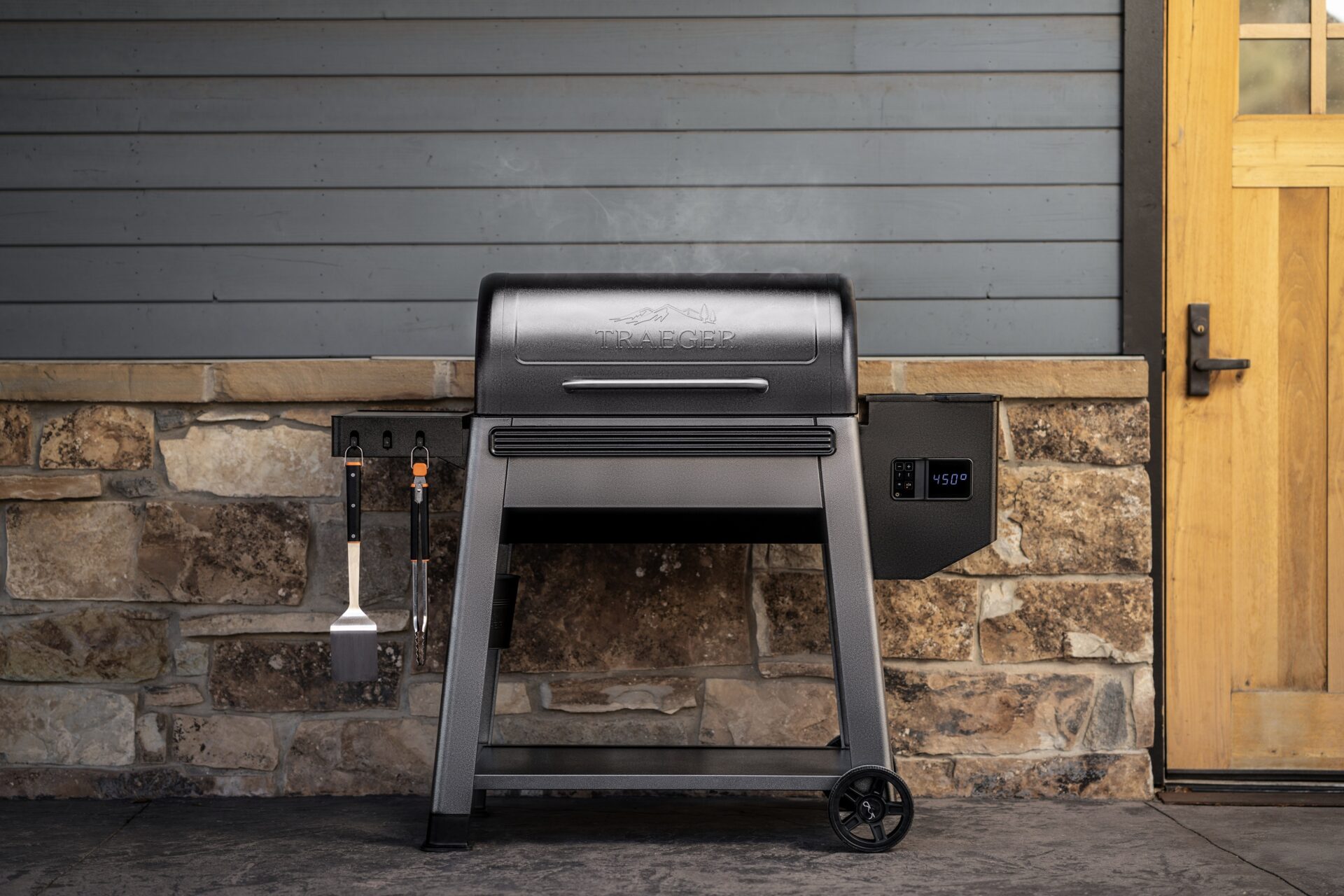

Grills are big, heavy, and tall. Those are three properties that aren’t helpful for packaging or storing inventory.
Traeger knows this as well as anyone. The challenges of direct shipping grills are what led them to shut down their DTC business and only sell through retailers.
As someone that receives quite a few grills, I can attest to the fact that a high percentage of them arrive with dings and imperfections from shipping. For consumers that are expecting a flawless grill, that can lead to higher complaints and added costs.
Packing Challenges
Grills often arrive damaged because of the physical limitations of packing a grill. Using quality materials creates higher weight, and large cook areas require wide and tall boxes. Pellet grills in particular are extra wide because of the hopper and auger assembly.
The usual way that a pellet grill is packed is the grill body comes with the lid attached and the pellet hopper attached. With foam around it, that determines the minimum width and height the box can possibly be.
The legs are then packed width-wise in the box, and the grates, accessories, and hardware is packed inside of the grill assembly. Pellet grills are some of the easiest grills to assemble but also some of the heaviest.
Packing Solution
Traeger appears to be working on better ways to reduce the size of the box that their grills come in. To do that, they need to reduce the unassembled volume of the grill compared to assembled.
In a recently released patent, they have a couple solutions to that. The most transformative of the two is developing a modular hopper and auger assembly.
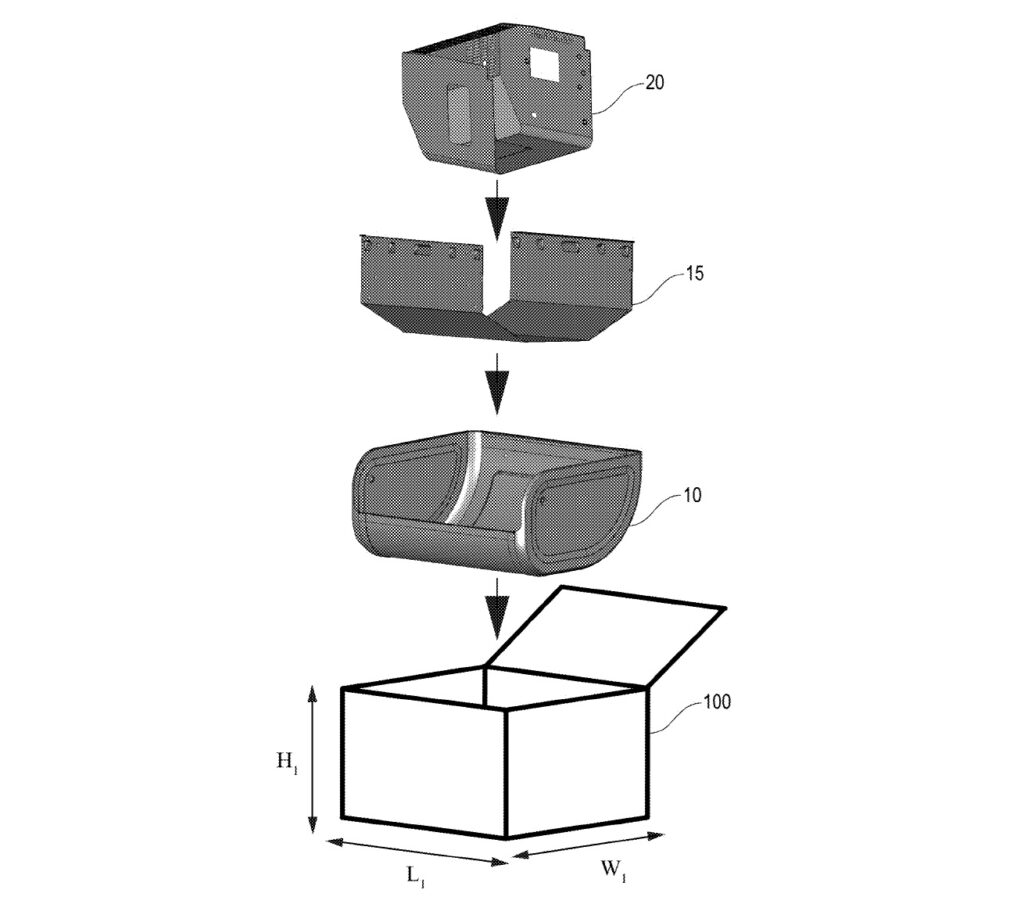
A major limitation in packaging is from the hopper being attached because there’s an auger running from the hopper into the fire pot. Separating the two creates a more complex assembly process for the consumer.
A modular design would allow the consumer to put the parts together without the need for much skill or additional tools. It also would have the additional benefit of easier repairs. The caveat to that is the design would need to match the reliability of an pre-assembled hopper and auger.
The other more minor change is shipping the lid separated from the grill body. Some grills come like this and are usually assembled with cotter pins on the hinges between the body and the lid.
Traeger’s combines those two changes in one embodiment of their patent to pack the box with the lid on the bottom, the grill body nested into it, then the hopper nested into the grill body. The patent claims embodiments of the design and packing that reduce unassembled volume up to 67% of assembled volume.
The key is really being able to separate the hopper from the grill body. Not only could they use the nesting approach from their patent, they could also evaluate packaging the hopper and auger in a separate box from the grill body.
This wouldn’t yield as much of a volume reduction when the boxes are added together but it would minimize the weight of each box. That could make it easier for last mile shipping with less damage in transit. It would also make the packaging more manageable for the consumer to put the grill together.
Current Status
We’re going to really nerd out about packaging here but you can see three different examples of packaging and design with Traeger’s three most recent grill releases. The updated Ironwood follows the simple method that I described previously where everything is pretty much assembled in the box.
This is the experience I had assembling a Pro 575 from their legacy models. It was easy, they had top notch branding and interaction with the packaging throughout the process. As designed, the ability to turn the box into a log cabin was fun and a big hit with my little kids at the time.
Next, Traeger released the Woodridge, which has quite a bit more assembly complexity than what was required in previous models. The Woodridge doesn’t have the conventional large hopper on the side design, so assembly and packaging is quite a bit different than their other models. It also effectively has a modular auger on it that the consumer attaches to the hopper and grill body.
Looking at the patent, the diagrams look like the entry-level Westwood pellet grill that Traeger released earlier this year. The grill is smaller with less features than their other grills, so it’s easier for shipping and boxed storage.
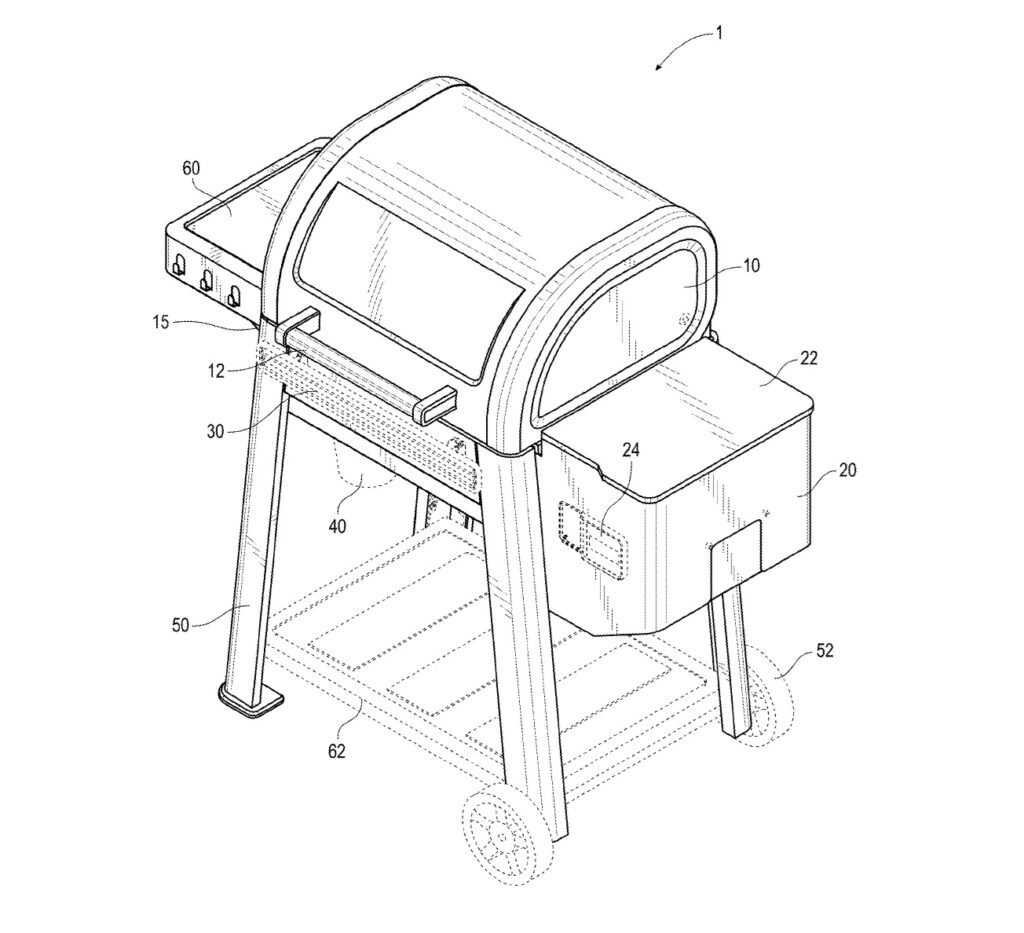
It has more of a conventional side hopper design and doesn’t have a modular auger like on the Woodridge. It also doesn’t nest like the illustration in the patent beyond the lid being easily removable, so despite the visual similarities in the patent, they didn’t follow the design for shipping.
I’m guessing the Woodridge has the highest volume reduction in packaging but also is the most complex to assemble. Is that trade-off worth it or is there a modular design for the traditional hopper models that’s only incrementally more difficult to assemble? Traeger has some of the best packaging in the business, so I’d expect they’ll figure that out.