
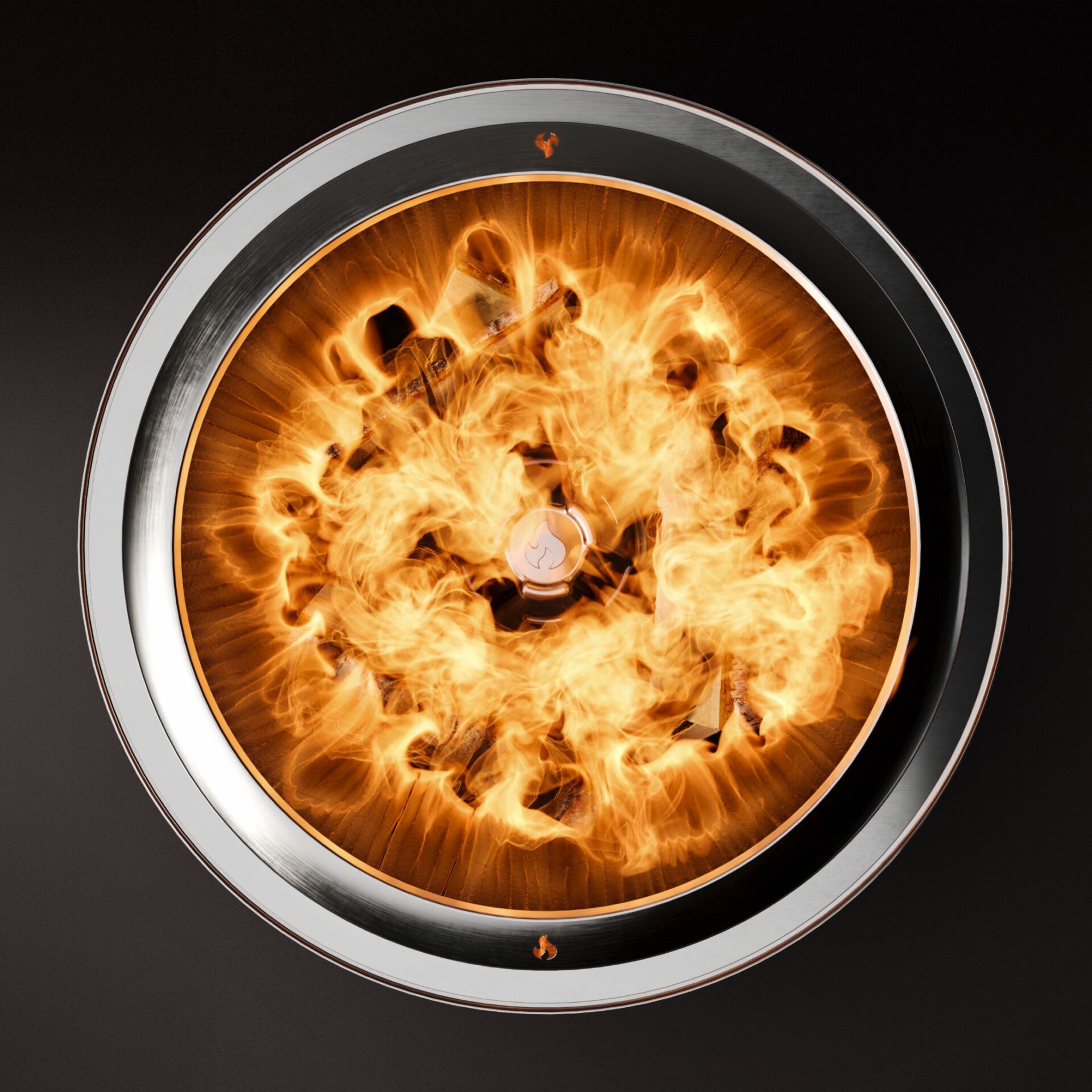

Solo Brands, the parent company of Solo Stove, has finished off a transformational year for the company. They went from having questions about solvency and barely releasing new products to a more favorable debt structure and bringing back their focus on innovation.
New products have always been important for the growth story of Solo Stove, but in this challenging environment, they’re more important than ever. Consumers are still buying innovation according to multiple manufacturers and large retailers.
Innovation also solves the problem that many companies like Solo Stove have faced. Once a consumer buys their long-lasting durable product, they don’t need to buy another one.
If you look at our DTC business, new products made up roughly 25% of the sales in Q4, so a significant percentage of the sales.
We did just launch a number of new products last week as well. We completed the full line of the all-new Summit Series of fire pits. We added a portable Steelfire 22 griddle as well as adding a smaller cooler.
And I was just looking through it last night in detail, over the last 4 or 5 days, 6 of our 8 top-selling SKUs are products we have launched since the fourth quarter of last year. So we feel the reception has been fairly strong on it.
The underlying question is the underlying demand on core products that we had, you’d say our core fire pits, and that’s a highly durable, long-lasting product. That’s why our customers love it so much.
But for us to expand sales, we really need to sell accessories related to those products, try to reinvent the category, which we’ve done with the Summit Series. And then those customers that love us so much really try to move them into the adjacent categories, and that’s what we’re trying to do with those new products.
John Larson, President and CEO of Solo Brands
Expanding into adjacent categories has been a focus for Solo Stove over the past couple years. It really kicked into high gear over the past year with them branching out into griddles, coolers, and other outdoor lifestyle products. Updating their core fire pit line with the new Summit also provides an opportunity for replacement sales.
Their transformation hasn’t just been about growing, or preserving, revenue either. They’ve been focused on resizing the company from what it was during it’s peak during Covid to where it should be to support their current level of revenue. They did quite a bit of restructuring in 2025, and they plan to do more in 2026.
I think I mentioned that at the end of the third quarter as well. As we did see revenue decline in Q3, it became obvious that we needed to be a structurally smaller, leaner, profitable company. And so we really are using tools available to us, AI, we view as a great tool for building efficiency. But we are definitely looking at cost reduction in the coming year.
We haven’t come out with exact numbers, but structurally, we’re taking a significant amount out in payroll, just as we did last year. I believe in Q4, payroll is down about 27% year-over-year. And the rest of the initiatives that we put in coming in, so we’ll have that full run rate for ’26, but we are leaning down even further.
I look at the consumer environment here, it’s a little uneven. The customers are selective. Our AOVs are up. So the people who do want to shop are spending more. But I think at the low-end discretionary spending, there’s some caution moving forward.
So we’re setting up the company to operate and not counting on revenue to go up dramatically to drive our business model, just becoming leaner and really rightsizing the company at the right level. But we’re still investing in innovation, new products coming out and pushing into some new categories as we discussed earlier.
John Larson, President and CEO of Solo Brands
Downsizing to match current revenue levels is a theme across the live-fire industry. Traeger has been undergoing their own cost optimization process. It’s a difficult, but necessary, decision given all the economic headwinds and category stagnation.